+(01) 1987 123456
12th street, LA
Reach out to our ENT specialists for expert care in hearing, breathing, and voice-related concerns.
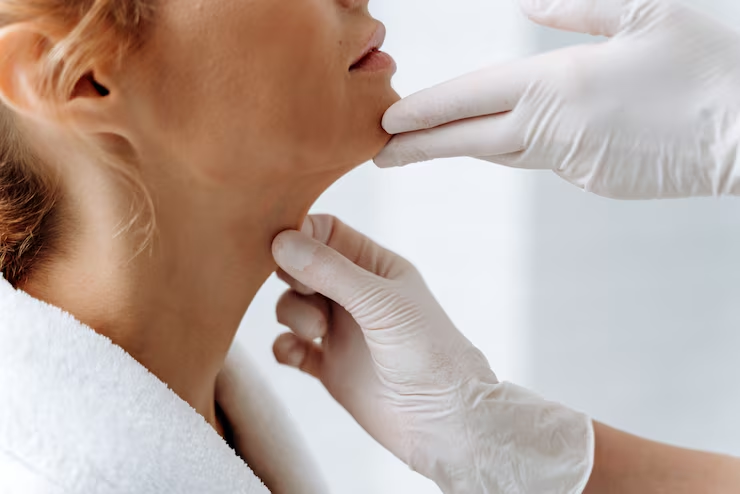
Salivary gland surgery is a specialized procedure performed to treat disorders affecting the major salivary glands—parotid, submandibular, and sublingual—or the minor salivary glands located throughout the mouth and throat. These glands are responsible for producing saliva, which aids in digestion, oral hygiene, and overall comfort. Conditions such as tumors, stones, infections, or chronic swelling may require surgical intervention to restore function, relieve symptoms, and prevent complications.
Surgery may be recommended for a variety of problems, including:
Salivary Gland Stones (Sialolithiasis): Hard deposits that block the flow of saliva, causing pain and swelling.
Benign Tumors: Non-cancerous growths that may enlarge and interfere with function.
Malignant Tumors: Cancerous growths requiring timely removal to prevent spread.
Chronic Infections: Recurrent bacterial or viral infections leading to persistent swelling.
Cysts or Abscesses: Fluid-filled sacs or pus collections within the gland.
The type of surgery depends on the affected gland and underlying condition:
Parotidectomy: Removal of part or all of the parotid gland, often performed for tumors.
Submandibular Gland Excision: Removal of the gland beneath the jaw, usually for stones or tumors.
Sublingual Gland Surgery: Performed for cysts or growths under the tongue.
Stone Removal Procedures: Minimally invasive techniques, such as sialendoscopy, may be used for smaller stones.
Surgeons take special care to preserve surrounding nerves and structures, especially the facial nerve in parotid gland surgery.
This treatment is suitable for individuals who:
Experience repeated swelling or pain due to gland blockage or stones.
Have a diagnosed tumor or suspicious lump in the salivary gland.
Suffer from chronic infections unresponsive to medications.
Need removal of cysts or abscesses affecting gland function.
Symptom Relief: Reduces swelling, pain, and discomfort.
Prevents Complications: Stops spread of infection or cancer.
Restores Function: Improves saliva flow and oral health.
Improves Quality of Life: Allows comfortable eating, speaking, and swallowing.
Safe and Effective: Modern surgical techniques ensure precision and protection of vital structures.
Salivary gland surgery is usually performed under general anesthesia and takes 1–3 hours, depending on complexity. Most patients can return home the same day or after a short hospital stay. Recovery involves managing swelling and following care instructions to protect the surgical site. Most people return to normal activities within a few weeks, with follow-ups scheduled to monitor healing and function.
Salivary gland surgery provides effective and long-term relief for conditions that cannot be managed with medication alone. With expert surgical care, patients can achieve restored comfort, improved oral health, and reduced risk of complications. Modern techniques ensure safe outcomes while preserving essential structures, making this surgery a reliable solution for both benign and malignant salivary gland disorders.
At The Cochlear ENT Clinic in Bangalore (Jayanagar), our expert ENT surgeons specialise in advanced salivary gland and salivary duct surgery—ideal for complex cases requiring precision, experience and personalised care. Trust us for reliable treatment of salivary gland stones, chronic gland issues, and minimally invasive interventions.